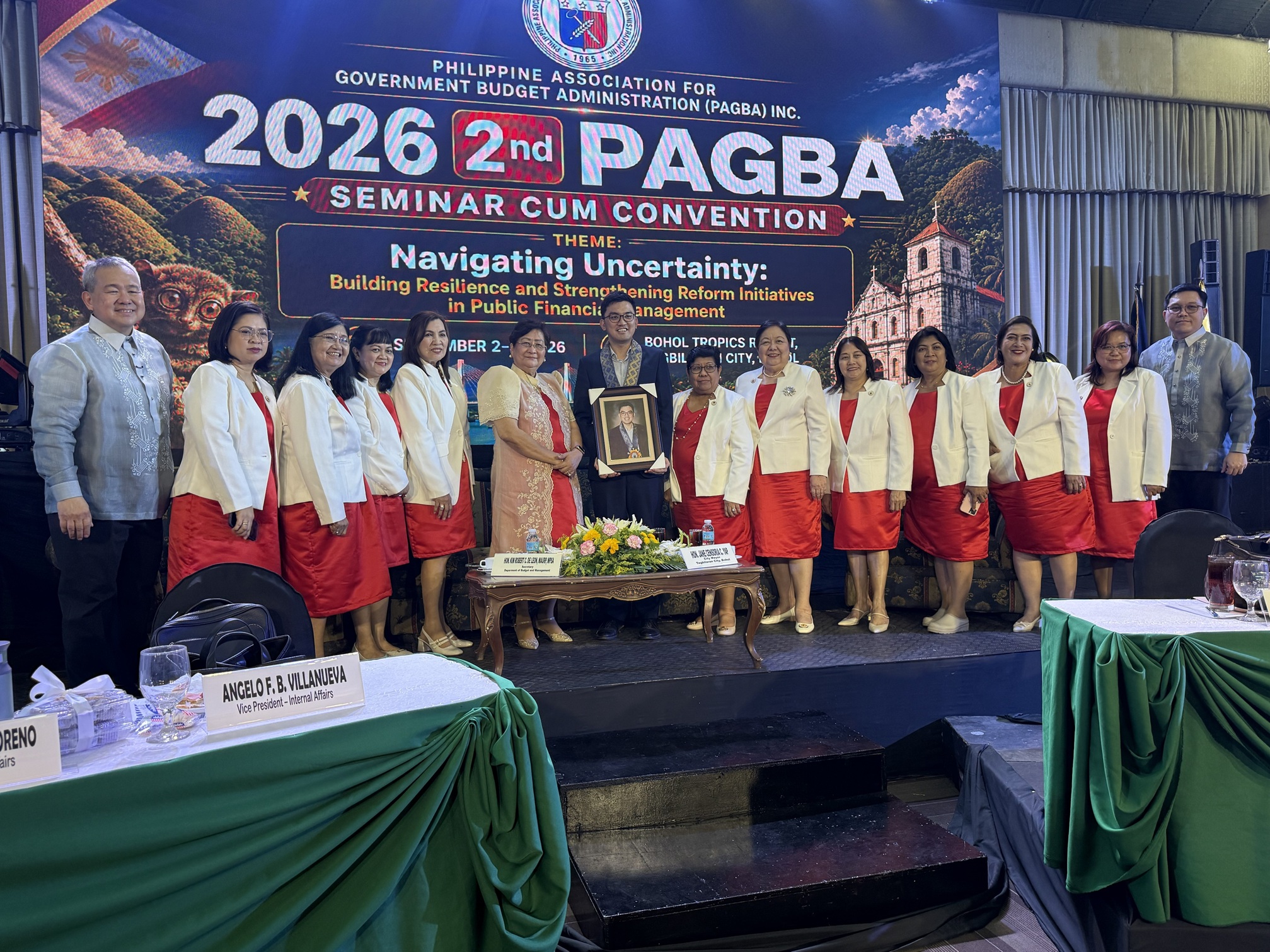
Beyond the Budget: Building Trust through Public Financial Management
Opening Keynote Address
September 2, 2026 | Tagbilaran City, Bohol
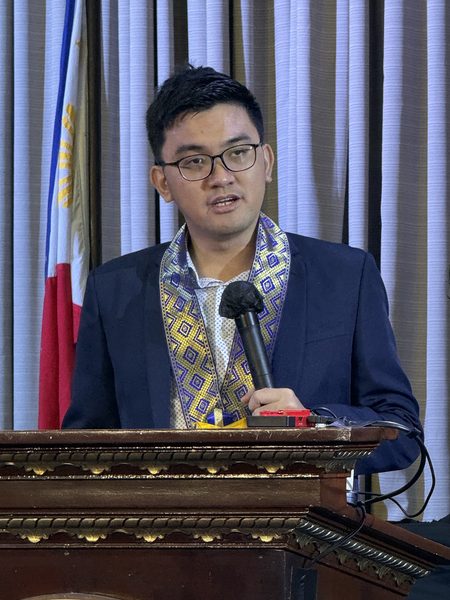
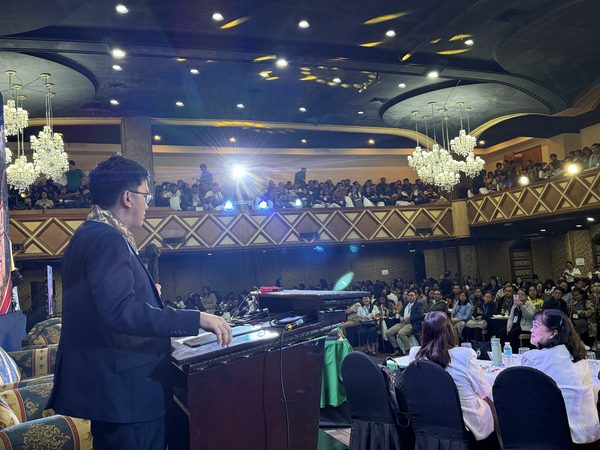
To the Philippine Association for Government Budget Administration Board, officers, and members, led by President
Zenaida Bolor-Chang; PAGBA Executive Vice President and former DBM Undersecretary Luz Cantor; my fellow public
servants, my DBM family, and all our participants—maayong adlaw sa inyong tanan!
Maraming salamat po sa mainit ninyong pagtanggap dito sa Bohol. And congratulations to PAGBA for bringing together once again the people who work behind the numbers, behind the allotments, and behind every government program that reaches our people.
Your theme, “Navigating Uncertainty: Building Resilience and Strengthening Reform Initiatives in Public Financial Management,” could not be more timely. Uncertainty is no longer the exception in government. It is part of the environment in which we work. Economic conditions change. Disasters happen. Technology evolves. New risks emerge. And the needs and expectations of our people continue to grow. But while circumstances may be uncertain, one thing must remain certain: government must continue to deliver.
That is why our Public Financial Management system cannot afford to stand still. As challenges change, our systems must evolve. As expectations rise, government must perform better. And as PFM practitioners, much of that responsibility rests with us.
Today, Congress is already deliberating on the proposed P7.2- trillion National Budget for Fiscal Year 2027. Much of the public attention will naturally be on the numbers: How much will go to education? To health? To infrastructure? To social protection? But while the country watches how the next National Budget is being shaped, we cannot lose sight of the budget we are implementing today.
A budget approved on paper means very little if it does not translate into results on the ground. Ang budget ay hindi
nagtatapos sa pag-apruba ng pondo. Doon pa lamang nagsisimula ang tunay nating trabaho. A classroom funded but never completed does not educate a child. A health program funded but delayed does not help a patient who needs care today. A road appropriated but left unfinished does not connect a farmer to the market. And assistance that arrives too late may no longer be assistance at all.
That is why when I was entrusted with the leadership of the Department of Budget and Management, I gave our people a very simple direction: Dito, bawal ang mabagal. Dito, bawal ang maghintay. At higit sa lahat, Dapat, Budget Malinis.
But speed does not mean cutting corners. We must be fast, but we must follow the rules. We must be responsive, but we must remain accountable. We must innovate, but we must protect the integrity of our institutions. And we must deliver without ever compromising the trust given to us by the Filipino people.
This is especially important for everyone in this room. Beyond the budget hearings, the debates in Congress, and the signing of the General Appropriations Act, it is our PFM practitioners who turn appropriations into action. Every document you review, every certification you issue, every obligation you process, every procurement decision you support, and every fund you help release carries a responsibility far greater than paperwork.
There is a Filipino waiting at the other end of that process. May estudyanteng naghihintay ng silid-aralan. May pasyenteng nangangailangan ng gamot. May magsasakang nangangailangan ng kalsada. May pamilyang kailangang matulungan pagkatapos ng kalamidad. And sometimes, what looks to us like one more document waiting on a desk may mean one more day that somebody has to wait for a government service.
That is why I always remind our DBM family that every peso has a human story. Our responsibility is to make sure that every peso reaches that story—on time, for the right purpose, with the greatest possible impact, and with integrity.
Kaya para sa ating mga kasapi ng PAGBA, tatlo po ang hamon ko sa inyo today: PAGBAbago, PAGBAbantay, at
PAGBAbalik ng tiwala.
Una, PAGBAbago.
Let us continue changing systems that no longer serve our people well. Let us embrace digitalization, simplify processes where we can, remove unnecessary bottlenecks, use data better, strengthen coordination across agencies and levels of government, and build institutions that are faster, smarter, and more responsive.
PAGBAbago also means being willing to change the way we ourselves work. Hindi sapat na sabihin nating, “Ganito na kasi ang proseso noon.” If there is a lawful, transparent, and more efficient way of doing things, then we should have the courage to pursue it. Government cannot solve the problems of tomorrow using systems designed only for yesterday.
Pangalawa, PAGBAbantay.
Every one of us is a steward of public funds. Hindi natin sariling pera ang ating hinahawakan. Pera ito ng taumbayan. That means our responsibility is not simply to spend. Our responsibility is to make sure that government spends correctly, efficiently, transparently, and for the purpose intended.
We must guard against waste. We must question unusual transactions. We must demand proper documentation. We must insist on accountability. And when something is wrong, we must have the courage to say so. Hindi puwedeng “pwede na.” Hindi puwedeng “nakasanayan na.” At lalong hindi puwedeng manahimik kapag alam nating may mali. Protecting public funds is not somebody else’s responsibility. It is ours.
Pangatlo, PAGBAbalik ng tiwala.
Ultimately, this is bigger than Public Financial Management. This is about public trust. Every time government spends correctly, transparently, and efficiently, we strengthen that trust. Every time we prevent waste, refuse shortcuts, and make sure that public funds reach their intended beneficiaries, we give our people another reason to believe that government can work— and that government can work for them.
This is why DBM continues to push reforms across the PFM system. We have strengthened our Philippine Public Financial Management Reforms Roadmap 2024–2028, focusing on budget reliability, fiscal transparency, and stronger policy-based budgeting. We introduced DBM COMPASS—the Centralized Open Monitoring Platform for Appropriations and Spending Statistics—to make budget and spending information more accessible to our citizens. And for our LGU budget officers, we launched the Ugnayang Budget Portal to make the submission of financial requests faster, easier, and more transparent.
But these are not reforms for reform’s sake. Hindi tayo nagdidigitalize para lang masabing digital na tayo. Hindi tayo nagrereform para lang masabing may bago tayong sistema. We reform because government must work better. We reform because public servants should spend less time navigating unnecessary bureaucracy and more time delivering results. Most importantly, we reform because the Filipino people deserve a government that is fast, transparent, accountable, and worthy of their trust.
My fellow public servants, we work with spreadsheets, allotments, obligations, disbursements, financial reports, and countless documents every day. But we must never allow the numbers to make us forget the people behind them. Public Financial Management is ultimately not just about managing money. It is about managing the people’s trust. And that trust is earned peso by peso, transaction by transaction, project by project, and decision by decision.
So as you spend the next few days learning from one another, I hope we ask ourselves not only, “How can we improve our systems?” Let us also ask ourselves: What can I personally do to make government work better? What process can I simplify? What delay can I help eliminate? What public peso can I protect? What questionable practice can I refuse? What reform can I help move forward? And what can I do, in my own office and within my own sphere of responsibility, to earn back the trust of our people?
Reform does not begin only with a new law, a new system, or a new policy from the top. Reform begins with the choices public servants make every single day.
So when we return to our offices after this convention, I hope we bring PAGBA with us—not only as the name of our
association, but as a commitment. PAGBAbago—change what needs to change. PAGBAbantay—protect every peso entrusted to us. And PAGBAbalik ng tiwala—show our people, through our work, that government can be worthy of their confidence again.
Let this be our collective commitment: no peso wasted, no process unnecessarily delayed, no wrongdoing ignored, and no Filipino forgotten at the end of the budget process. That is the kind of Public Financial Management our country needs. That is the kind of public service our people deserve. And that is the PAGBA I hope will lead the way.
As President Ferdinand R. Marcos Jr. reminded us in his fifth State of the Nation Address: “We do this for our children. We do this for our future. We can but do this, because we love our country and we love our people.”
At the end of the day, that is the most important reason why we do what we do. Para sa bayan. Para sa bawat Pilipino. At para sa kinabukasang ipinagkatiwala nila sa atin.
Kaya sama-sama nating isulong ang PAGBAbago, PAGBAbantay, at PAGBAbalik ng tiwala.
Mabuhay ang PAGBA! Mabuhay ang ating mga lingkod-bayan! At mabuhay ang Bagong Pilipinas!
[END]